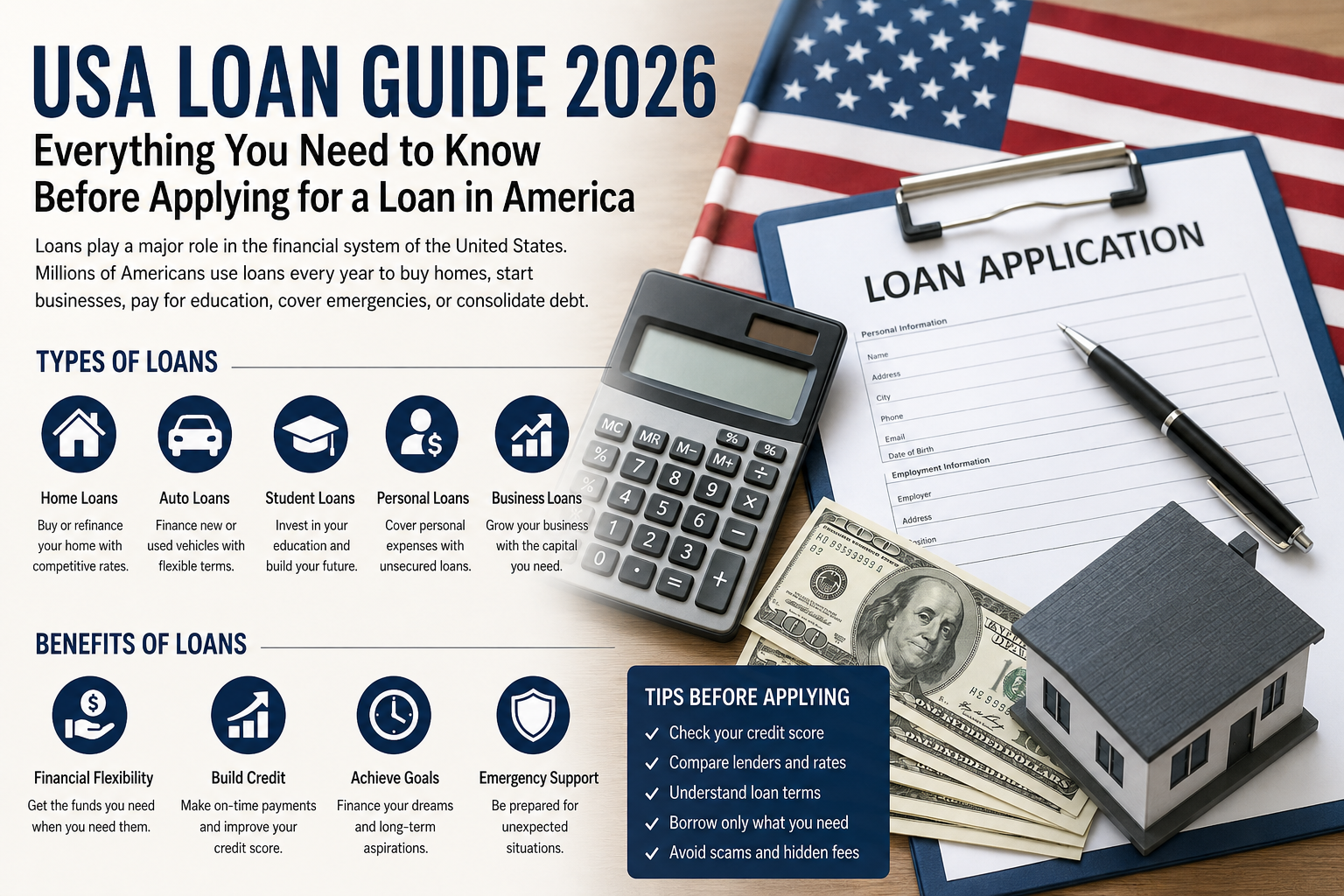
Loans play a major role in the financial system of the United States. Millions of Americans use loans every year to buy homes, start businesses, pay for education, cover emergencies, or consolidate debt. Whether you are a student, immigrant, worker, or entrepreneur, understanding how loans work in the USA can help you make better financial decisions and avoid unnecessary debt problems. In this complete guide, we will explain the types of loans available in the United States, how to qualify, interest rates, advantages, risks, and important tips before applying. What Is a Loan? A loan is money borrowed from a bank, credit union, online
lender, or financial institution that must be repaid over time with interest. The borrower receives a specific amount of money and agrees to pay it back in monthly installments. In the USA, loans are commonly used for: Buying a house Paying college tuition Purchasing a car Starting a business Medical emergencies Debt consolidation Personal expenses Loans can be short-term or long-term depending on the purpose and agreement. Types of Loans in the USA 1. Personal Loans Personal loans are one of the most common loan
types in America. These loans can be used for almost any purpose, including medical bills, weddings, travel, or emergency expenses. Features of personal loans: Fixed monthly payments Flexible repayment terms Can be secured or unsecured Interest rates depend on credit score Most lenders offer personal loans ranging from $1,000 to $100,000. 2. Student Loans Education in the USA can be expensive, so many students depend on student loans. There are two major types: Federal student loans Private student loans Federal student loans usually offer lower interest rates and flexible repayment options. International students may need a
co-signer to qualify for private loans. Popular federal loan programs include: Direct Subsidized Loans Direct Unsubsidized Loans PLUS Loans 3. Home Loans (Mortgage Loans) Mortgage loans help people purchase homes or real estate properties. Common mortgage types include: Fixed-rate mortgages Adjustable-rate mortgages FHA loans VA loans USDA loans Mortgage repayment periods are commonly: 15 years 20 years 30 years The interest rate depends on: Credit score Income Down payment Loan term 4. Auto Loans Auto loans are used to buy new or used vehicles. Most car loans in the USA are repaid within: 36 months 48
months 60 months 72 months A good credit score can help borrowers secure lower monthly payments and better interest rates. 5. Business Loans Small businesses and startups often need funding to grow operations. Business loans can be used for: Inventory Equipment Marketing Expansion Employee salaries The U.S. Small Business Administration (SBA) offers several programs for entrepreneurs. Popular business loan types: SBA loans Term loans Business lines of credit Equipment financing How Credit Score Affects Loans Credit score is one of the most important factors in the American loan system. A credit score is a number that represents a person’s financial reliability. In the USA, FICO scores generally range from 300 to 850. Credit score categories: Excellent: 800+ Very Good: 740–799 Good: 670–739 Fair: 580–669 Poor: Below 580 Higher credit
scores usually mean: Lower interest rates Higher loan approval chances Better repayment terms Lenders review: Payment history Credit utilization Length of credit history Existing debt Recent applications Loan Interest Rates in the USA Interest rates vary depending on: Loan type Credit score Economic conditions Lender policy Approximate loan interest ranges: Personal loans: 6%–36% Student loans: 5%–15% Mortgage loans: 5%–8% Auto loans: 4%–20% Borrowers with strong financial profiles usually qualify for lower rates. Requirements to Get a Loan in America Most lenders require several documents and conditions before approving a loan. Common requirements include: Valid ID or passport Social Security Number (SSN) Proof of income Employment details Bank statements Credit history Address verification For international students
or immigrants, some lenders may require: Visa information U.S. co-signer Proof of university enrollment Online Loan Applications Many Americans now apply for loans online because the process is fast and convenient. Advantages of online loans: Quick approval Digital document upload Instant prequalification Easy comparison between lenders Popular online lenders provide approval decisions within minutes. However, borrowers should always verify: Interest rates Hidden fees Repayment terms Company reputation Advantages of Loans Loans can provide several financial benefits when used responsibly. Financial Flexibility
Loans help cover large expenses without paying the full amount immediately. Opportunity for Growth Business and education loans can improve future income potential. Emergency Support Personal loans can help during unexpected financial emergencies. Credit Building Making payments on time can improve your credit score. Risks of Taking Loans Although loans can be useful, they also carry risks. High Interest Costs Borrowers may repay much more than the original amount. Debt Problems Missing payments can lead to financial stress and legal action. Credit Score Damage Late payments negatively affect credit history. Hidden Charges Some lenders charge: Origination fees Late fees Prepayment penalties Always read the loan agreement carefully before signing. Tips Before Applying for a Loan Compare Multiple Lenders Never accept
the first offer immediately. Compare rates and repayment options. Check Your Credit Score Improving your credit score before applying may help you save money. Borrow Only What You Need Avoid taking larger loans than necessary. Understand the Terms Know the: Interest rate Monthly payment Loan duration Penalties Avoid Scams Be careful with lenders asking for upfront payments or personal information without verification. Best Loan Options for International Students International students in the USA often face difficulties because they may not have American credit history. Some lenders specialize in student financing for international applicants. Important factors include: University eligibility Academic performance Future employment potential Co-signer availability Scholarships and grants should also be considered before taking
large student loans. Future of the Loan Industry in America Technology is rapidly changing the loan industry. New trends include: AI-based approvals Digital banking Instant verification systems Mobile loan applications Fintech companies are making borrowing faster and more accessible for millions of people. At the same time, financial experts encourage responsible borrowing to avoid long-term debt problems. Conclusion Loans are an essential part of life in the United States. From education and housing to business and emergencies, loans help millions of people achieve important financial goals. However, borrowing money
also comes with responsibility. Before applying for any loan in America, borrowers should carefully compare lenders, understand interest rates, check repayment terms, and avoid unnecessary debt. Responsible financial planning can help people use loans as a tool for growth instead of becoming trapped in debt. Whether you are a student, worker, entrepreneur, or newcomer to the USA, understanding the American loan system can help you make smarter and safer financial decisions in 2026 and beyond.